
The Journal · May 2026
The Annual May Debate: Lilacs vs. Lily of the Valley
May is the month I live for in the Northeast. The stubbornly unpredictable month — one afternoon warm enough to convince you summer has arrived, the next five days gray and cold and smelling of rain, pollen, and mud. May earns its rank because of what blooms in it. And nothing blooms quite like the two plants that have occupied my thinking this past week: lilacs and lily of the valley.
They arrive together, usually within days of each other, and their smells have me equally ecstatic. I end up standing in a yard somewhere, nose moving between the two, trying to settle a debate that has no resolution — and that I fully intend to keep having for the rest of my life.
Two Completely Different Conversations
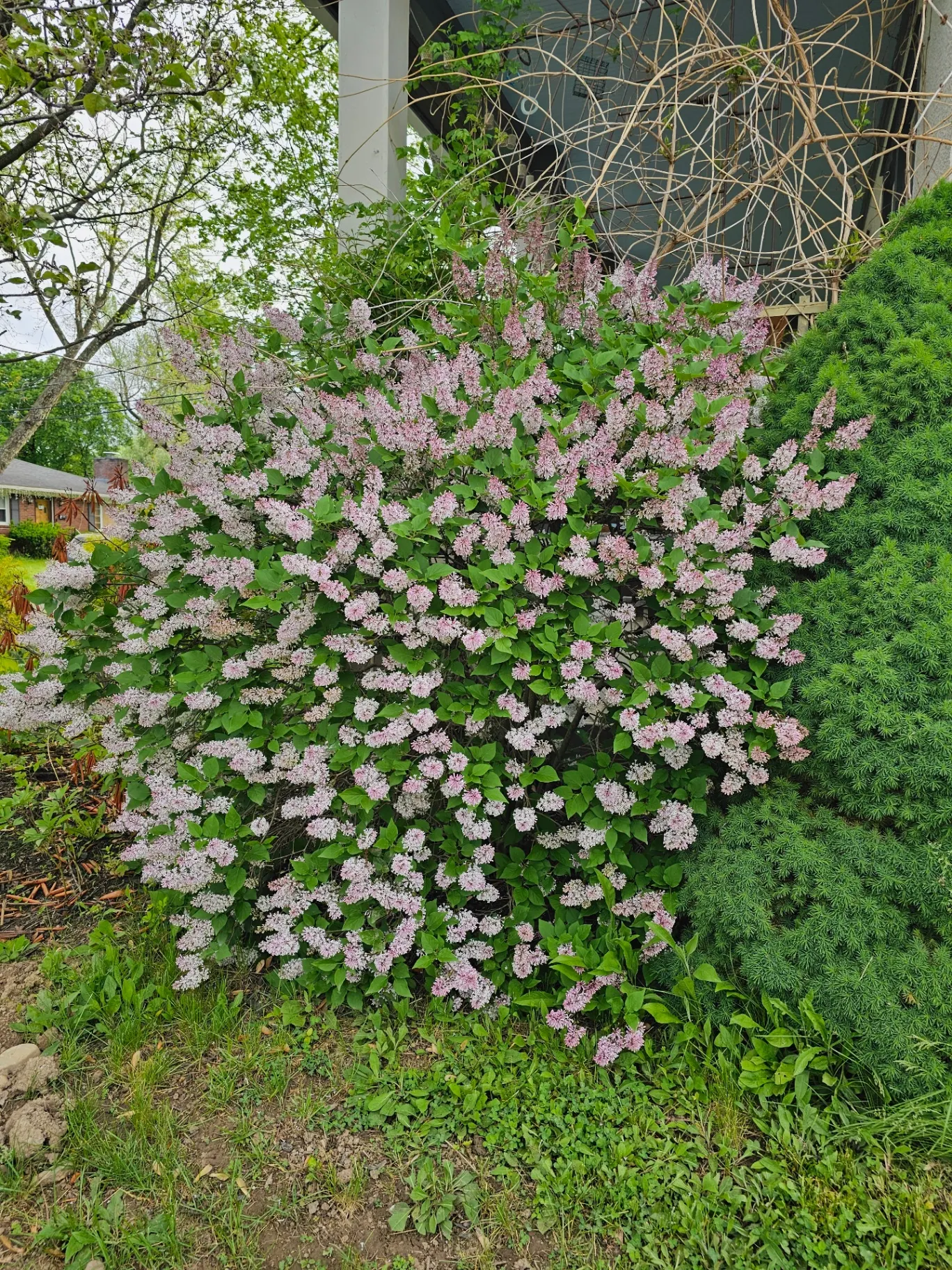
Lilac (Syringa vulgaris) is loud. It announces itself. That fragrance — deep, heady, resinous, almost purple in its intensity — carries across a yard, down a street, through a cracked car window. It smells like something that has been here for a very long time and intends to stay. There's weight to it. Warmth. It is the olfactory equivalent of a long exhale after a long winter.
Lily of the valley (Convallaria majalis) is something else entirely. It doesn't announce — it whispers to your feet. Fresh, green, clean, with a dewy quality that perfumers have spent decades trying to bottle and never quite captured. It smells like the exact moment the cold finally breaks. Where lilac is a declaration, lily of the valley is a secret. Where lilac fills a room, lily of the valley makes you crouch down and get closer.
Put them side by side and you have the full argument for May: the grand and the delicate, the old and the new, the voice and the breath.
I cannot choose. I refuse to choose. That is my position and I am standing by it.
On Lilacs and Their Insane Diversity
Here is something that should stop you in your tracks if you've ever assumed a lilac is just a lilac: there are over 600 named cultivars of Syringa vulgaris alone. Six hundred. The color palette runs from the palest ghost of lavender through every imaginable shade of purple, mauve, and violet, into near-red darkness, and all the way to white. There are doubles and singles, early bloomers and late bloomers, dwarfs that top out at four feet and shrubs that reach twenty.
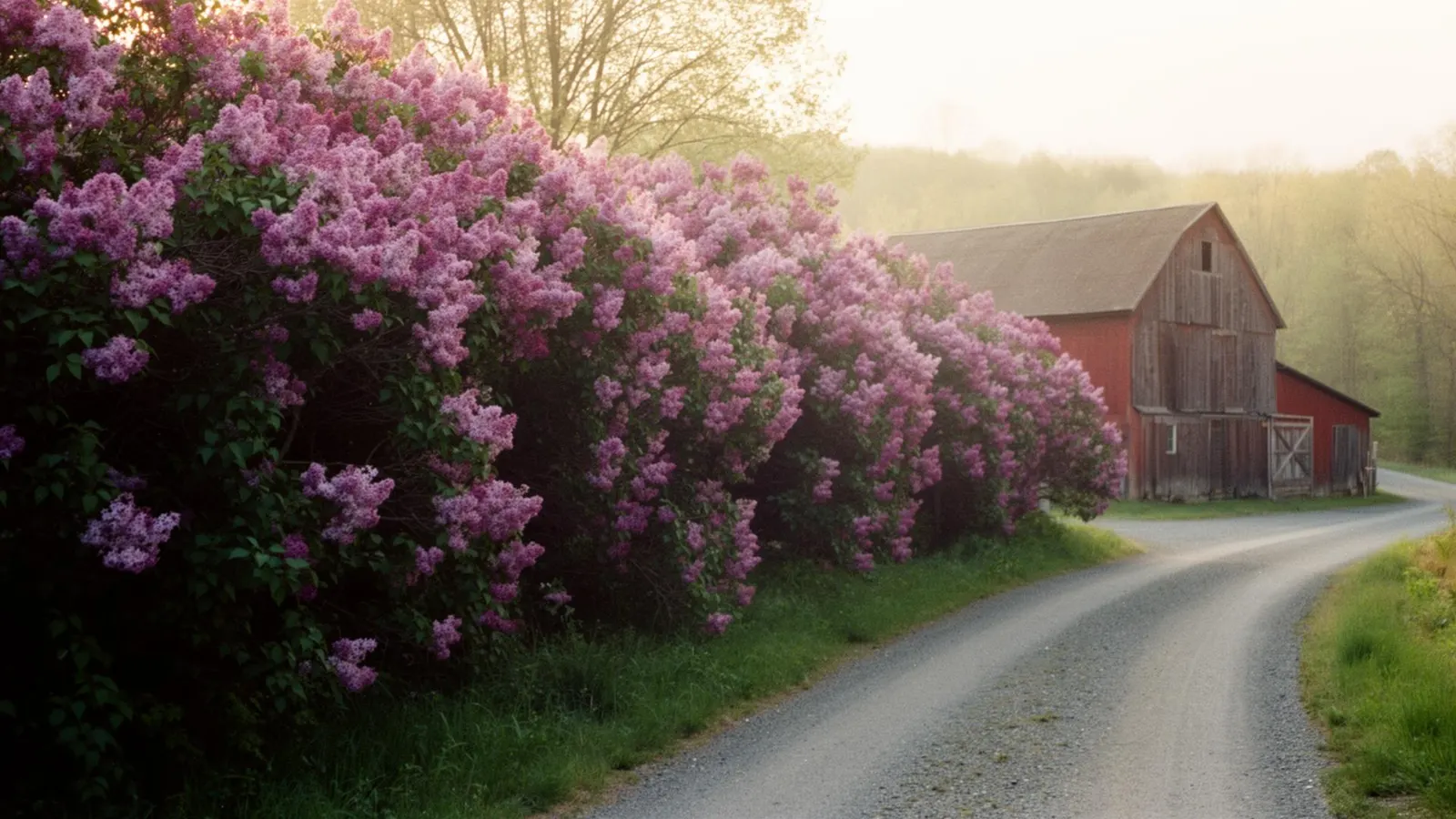
I am, by temperament, a traditionalist. The common lilac — that soft, medium purple that reads as lavender in certain light — jumps at me and pulls me back to Germantown, NY: a u-shaped driveway, a big red barn, a row of lilacs that towered over my head as their smell filled my whole being every May in the 1980s. It smells the way memory smells — small hands delivering stiff bouquets to my mom or the dinner hostess, my proud dad encouraging the spark of conversation, his blue eyes and upward-peaking eyebrows. This pinkish-blue sky lilac is the kind of flower that lives in the purest part of my heart, its color signaling the impending summer.
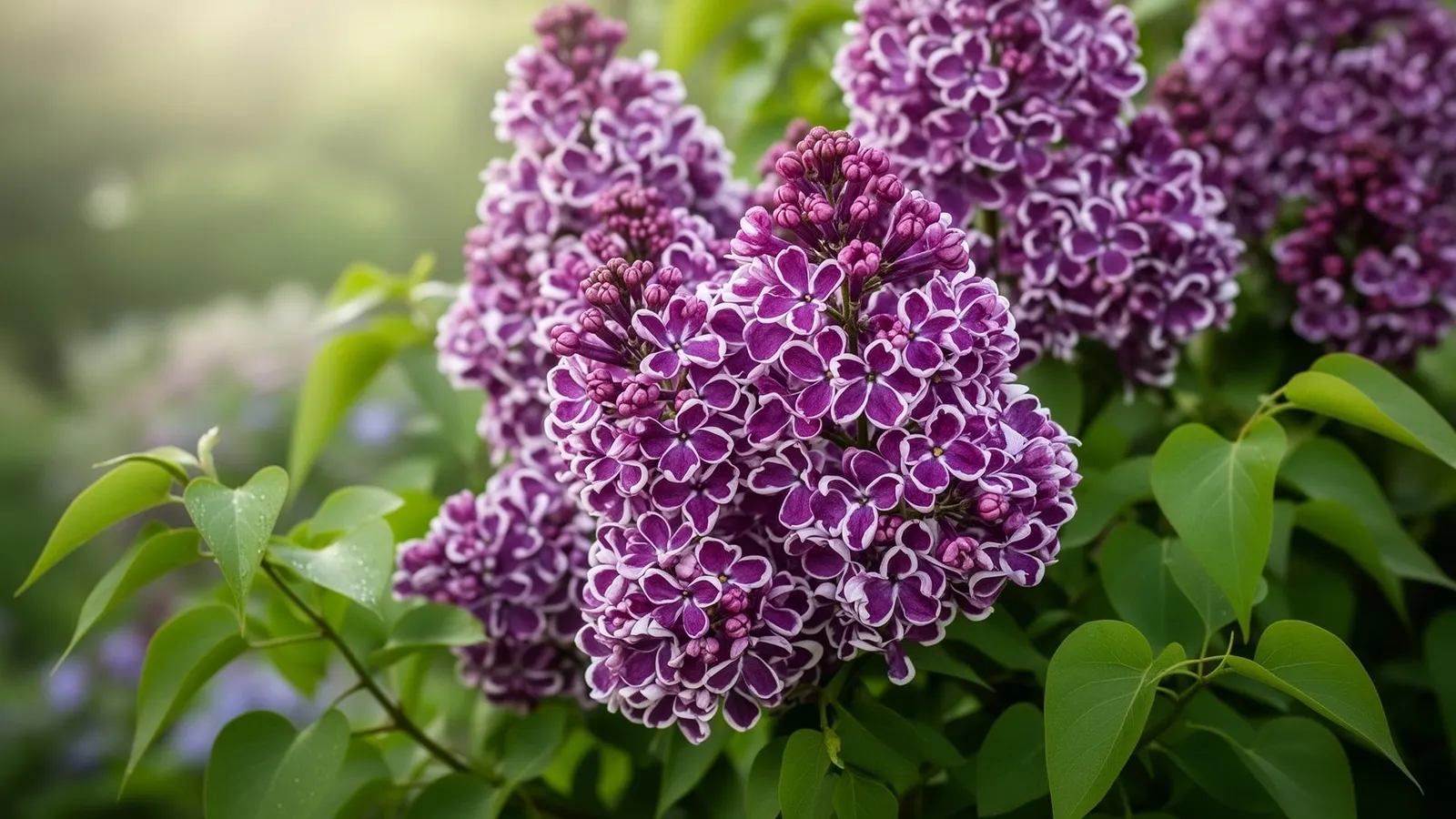
The variegated and bicolor forms are the ones that make me swoon. When I see 'Sensation' in full bloom — purple petals edged in crisp white — I feel what I can only call horticultural glee, which is a specific emotion that people in our corner of the world will recognize immediately. The detail in those tiny tubular petals. The way it reads as one soft color from a distance until you get close and see all the fantastic intricacy of its little insect offering. So distinctive it earned a Royal Horticultural Society Award of Garden Merit — and if you can find it, plant it immediately.
I should also acknowledge the dark purples, which I find extraordinary but would never plant myself — in my mind, that color belongs to an iris. Some cultivars are so saturated they seem to absorb light. I'm thinking of 'Ludwig Spaeth,' an older German cultivar, a deep reddish-purple that is almost aggressive. 'Charles Joly' goes just as dark, with the added drama of double flowers.
Then there is the white end of the spectrum, which stacks up nicely against the lily of the valley. Sometimes the whites are first to open, bursting out of the quasi-green unfolding of early spring. 'Beauty of Moscow' — a Russian cultivar developed in 1943, which is a remarkable thing to know about a lilac — opens from pink buds into double white flowers with a grace that is genuinely hard to describe without sounding overwrought. My house came with English lilacs: a rounder shrub, smaller flowers, blooms that seem to pop up right on top rather than cascade. Understated in the best way.
Plants with Stories
Here is the thing about lilacs that goes beyond botany: they outlive almost everything.
These shrubs can survive for centuries. They have been found blooming on abandoned homesteads long after the houses fell, the families moved on, and the fields returned to forest. Somewhere in Malone, New York, lilacs growing today are believed to descend from plants described in Laura Ingalls Wilder's Farmer Boy — meaning they have been blooming there for well over a hundred years. Thomas Jefferson grew lilacs at Monticello beginning in 1771. It is entirely possible that some of his originals still stand.
In the early 1800s, it was customary in the Northeast to plant lilacs by the front door — a new and fashionable shrub, recently arrived from Europe, chosen for the exact quality that still makes people stop on sidewalks: that fragrance greeting you as you came home. The plant took root. The tradition took root. And then the people moved, or the houses changed, and the lilacs stayed — or if everyone was lucky, the saplings were dug up and brought to the new house.
I planted five lilacs in my yard last spring — a gradient, light purple grading to dark purple in a short band, a small act of botanical ambition that pleased me enormously. They came from various places: the family farm, dug up and passed around yards in Livingston, NY the way plants move through families — quietly, in the back of cars, with stories attached. My sister had to remind my aunt about a small hedge that was quietly getting shaded out by trees growing overhead. Those were dug up from Pop Ellis's house on County Route 31.
Back in the 1990s, Pop Ellis's yard was magnificent in its chaos — an anarchy that suggested someone who made decisions for reasons known only to him — save for a magnificent hedge of lilacs that practically cascaded over the road. Remarkably purple, heavy, overflowing. When he left, the new owners took the entire hedge down. Now I have part of his rooted chaos inside my own fence, and it will not be lost to shadow.
This is what lilacs do. They become repositories. They hold the memory of the people who planted them long after those people are gone. A lilac isn't just a shrub. It's an archive.
On Lily of the Valley's Quiet Power
Lily of the valley is a bit fussy — you sort of have to let it be alone in its shady little wonderland. You can often find it in areas where old homesteads once stood, now folded back into forest. The fragile leaves and flowers love to be left alone, creeping along happily for decades, though they're equally happy to jump in the back of the car and try out a new corner of your yard.
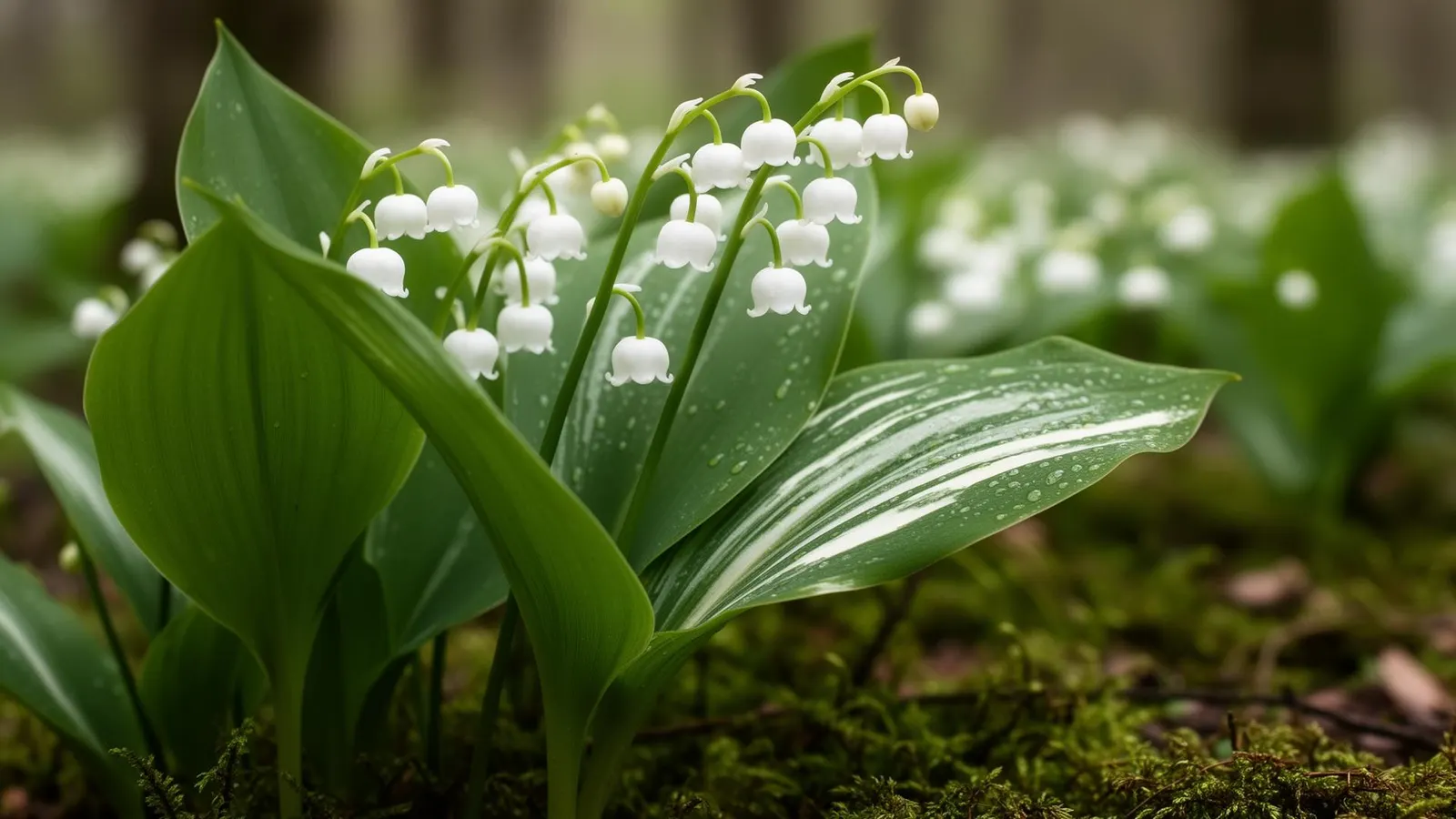
In Victorian floriography it signified a return to happiness. In folklore, it was said to have sprung from Eve's tears when she was cast from the Garden of Eden. Its bell-shaped flowers — tiny, white, impossibly delicate — hang from arching stems in clusters that look like they belong in an illustrated fairy tale.
And that scent. Perfumers have spent enormous resources trying to synthesize it accurately, because the actual compounds that create lily of the valley's fragrance are too volatile to distill — they vanish too quickly. The real thing, caught on a walk in early May, remains unreproducible. It is one of those smells that exists fully only in the moment you encounter it, which is probably why it hits with such force and why people remember exactly where they were when they first truly noticed it.
By comparison to the lilac's sprawling 600-plus cultivars, lily of the valley has only about 19 varieties. The pink ones are sweet, but I prefer the white flowers against those broad, deeply green leaves. I have never seen the 'Albostriata' variety — variegated leaves, green striped with white — but now I have something to search out in the spring of 2027.
The Verdict
There is no verdict. That's the point.
What I can tell you is that May in the Northeast hands you two of the most extraordinary fragrances in the plant world, simultaneously, briefly, and then takes them both away. The window is roughly two weeks. The lilac blooms and fades. The lily of the valley follows, and then it too is gone — and you spend the rest of the year carrying them around in some part of your brain until the following May when they ambush you all over again.
I planted my gradient of lilacs — one lone flower this year, which is entirely normal for newly established plants and which I am choosing to see as patient rather than disappointing. In a few years, when they hit their stride, I'll have light purple grading to dark across a short band, and I will think about the farm, and my grandmother, and Pop Ellis's chaotic yard, and the hedge my aunt almost lost to shadow.
A plant with a good story is one of the finest things there is. The beauty and the passing are the same thing.
Come back in May.
Botanically Bound is a curated marketplace where plant lovers and botanical makers unite. This blog is where we think out loud about the plant world — the science, the stories, and the things that make us stop mid-stride in someone else's yard.